Showing posts with label banks. Show all posts

Thursday, 16 September 2010

beyond a single currency

The World Bank's new clean energy czar Daniel Kammen tells the New York Times that one big hurdle is getting economists to recognise the value of externalities.

Our economy is fixated on one metric, money ... we need to put a value on the quality of our energy systems, the ability to preserve nature, to preserve the oceans and the rivers.

I sort of liken this to the invention of money. We now need to [move] beyond our single currency value to one where the social and environmental parts of the story are equally represented. That’s the next challenge.
more ...

Tuesday, 15 December 2009

low impact woman

Several lines from Irving Berlin's Annie Get Your Gun, currently playing at the Young Vic with Jane Horrocks (left), have a timely resonance.

For all her sharp-shooting, Annie Oakley emerges as a low impact woman: no diamonds, no pearls, no mansion, no yacht, no silver and no gold. Even wiser:

Got no checkbooks, got no banks,
Still, I'd like to express my thanks.
I've got the sun in the morning
And the moon at night
more ...

Wednesday, 11 November 2009

strange religion

The Guardian has an interview with sci-fi writer Kim Stanley Robinson about his new book Galileo's Dream.

In Galileo's time, science was clashing with religion; today, Robinson believes, we're living in a "Galilean moment" again, in which climate change means science has become politicised. This time, though, the clash is with capitalism.

"There are cultural forces in our society which say, you can save the world or else you can make a profit, and they'll say sorry, we have to make a profit. So we have a strange religion now."
more ...

Tuesday, 10 November 2009

bail-outs and bonuses

A couple of years ago, Al Gore was addressing a group of bankers in London, telling them (in essence) that one of the main things that screwed up the environment was the City's unhealthy emphasis on driving up their quarterly figures. This hunger for short-term profits - which Adam Smith himself argued against - was deeply unsustainable. (In this respect, a play about modern corporations is also a play about climate change.) Maybe, even then, the banks weren't listening because they knew that whatever damage they caused, they couldn't fail.

In the current issue of the LRB John Lanchester gives a fairly precise example of the incredible deal that banks have negotiated:

Goldman Sachs, the biggest of the investment banks, was rescued from insolvency by a taxpayer injection of $10 billion last October; then it collected another $12.9 billion in credit default swap insurance, also provided by the taxpayer, thanks to the bail-out of AIG; then it announced that it was paying itself $16.7 billion in pay and bonuses for the first three quarters of this year

If you think this is wrong, well, they don't. Lloyd Blankfein, chairman and CEO of Goldman Sachs, told the Sunday Times, he was doing 'God's work'.

pic: 'Enron' by Lucy Prebble (Royal Court) more ...

Friday, 27 February 2009

the opposite bank

Last night the Nobel Laureate Muhammad Yunus told his audience at the Royal Geographical Society that the approach he took when setting up the Grameen Bank was to look at what every other bank was doing and then do exactly the opposite.

Impossible not to compare two bankers - Sir Fred Goodwin and Mohammad Yunus - two world views: one that works, one that doesn't.

There's something almost Wildean about Yunus's stories. He overturns the assumptions by which a society operates. The Grameen Bank has loaned money to tens of 1000s of beggars and his bank still flourishes. Other banks that only lend to the rich (because of 'economic realities') have crashed.

(You can catch a good interview with Yunus where he explains the principles of micro-credit. The interviewer says, 'This is such a great idea, what are the road blocks?' Yunus replies, "Number one: mindsets.') more ...

Friday, 12 December 2008

david lan gets it

The Young Vic's artistic director David Lan identifies two key issues in relation to theatre and climate change. One is the global interconnectedness of 21st century lives. The other is the 'impossibility' of controlling context when everyone arrives with their own ideas.

On interconnectedness: 'The premise one starts from is: "We want to learn". I suppose a lot of the impulse comes from a sense of wanting to live in the real world, and part of the process of being alive is constantly discovering that you don’t really understand what’s going on and you want to know a little bit more than you did last week and the realities of the way we live are so complicated, but as the last three months have made abundantly clear, we are also living in each other’s pockets. A complex financial situation in downtown Miami can cause a collapse of the banks in Reykjavik. Now, what does that mean about the way we create work in the theatre?'

On context: ' ... part of the job of producing is to try and control the way in which the audience receive what you are creating, by the context in which that is presented. If you are working in an area, like this Brazil project , which has a relationship to a set of ideas and arguments and actions about climate change, it is very, very, very hard, it is impossible, to control that context, because everybody comes at it with a set of their own ideas.'

Hat tip RSA. more ...

Sunday, 23 November 2008

how quickly plays date

OTTO. In my opinion the people running the country are capable people. The economy's doing well. They know what they're doing. Therefore.

LORI. Therefore what?

OTTO. Explain to me why this government shouldn't be in power for ever.

Gethsemane by David Hare (opened 12 November 2008). more ...

Saturday, 8 November 2008

crunch time

'Unfathomable chains of debt, double-speaking government departments, the robbing of Peter to pay Paul,' writes Rachel Cooke, 'All the themes of this dark autumn are here. Little Dorrit (BBC1) is 'a metaphor for the credit card age'. more ...

Friday, 7 November 2008

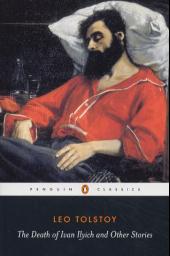
tolstoyan moment

The Anglo-Saxon model of unrestrained free-market capitalism, says the New Statesman, is fatally flawed

Even Alan Greenspan, the high priest of deregulation, has, like Ivan Ilyich in the famous Tolstoy story, had a moment of startling self-revelation that has left him confused about the purposes of his life's work.


He did not know what he thought he knew. What he thought was so is not the case. 'I have found a flaw,' he said in October, following the bank bailouts, 'I have been very distressed by that fact . . . Those of us who have looked to the self-interest of lending institutions to protect shareholders' equity, myself especially, are in a state of shocked disbelief.'
more ...

Tuesday, 4 November 2008

of interest

When novelist Margaret Atwood opened her first bank account at the age of eight she found this thing called interest kept turning up in her account.
'Grown-ups said banks were real and tooth-fairies were unreal, but I wasn't sure that that was true and now it appears that banks too have an illusory quality.'
more ...