Showing posts with label poetry. Show all posts

Tuesday, 19 October 2010

from lakes to melting glaciers

Here we have the complex paradox which lies at the heart of the Cape Farewell project; we cannot look on melting glaciers as the Lakeland poets looked on the Lakes.

Theatre director Deborah Warner on her Cape Farewell trip. more ...

Tuesday, 8 June 2010

imagining things differently

In this second guest post about the recent Dark Mountain festival, English lecturer and blogger Abbie Garrington welcomes the move from 'manifesto to differently-imagined manifestation'.

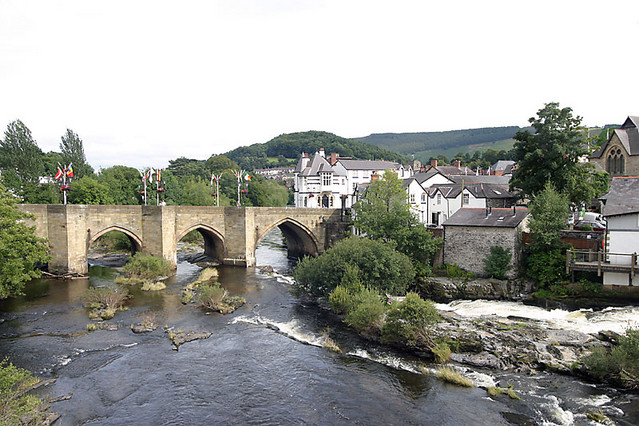
As Benjamin Morris's post yesterday made clear, the Dark Mountain manifesto has caused some controversy since its launch nine months ago. The most widely-read response has been George Monbiot's, with the comments facility beneath his Guardian article attracting many more queries about just what Dougald Hine and Paul Kingsnorth propose and why. Solitaire Townsend's more recent address to the issues brimmed with frustration. It is testament to the broad church approach of the Dark Mountain project, and the hospitality of its hosts, that many of these doubters and critics were compelled to make the trip to picturesque Llangollen (pic) to find out more at the Uncivilisation festival that was the result of this nine-month ideological gestation period.

The decision to stage a festival which extrapolated upon and defended the ideas behind the manifesto was a bold one - it is far from easy to make the transition from manifesto to manifestation, to see the necessarily artful language of an attention-grabbing piece find some kind of expression in a gathering. Dougald and Paul's welcome to the festival acknowledged the accusations of their critics, admitting that their own position had been refined and re-worked in the time since writing. While others saw this as a weakness, the authors suggested it was a strength, demonstrating the flexibility of a manifesto that responded to the ecology of the ideas that gathered around it, rather than standing rigid in the manner of a political tract. With its emphasis on the role of art in the revolution of human thought (and with its origins in many hours of pub discussion) the Dark Mountain manifesto owes more to the -ists and -isms of the early twentieth century than to the political pamphlet tradition. The invitation to Llangollen was intriguing as a result - to what cause, exactly, were we rallying?

One of the most interesting aspects of Uncivilisation's rather ragged gathering of thinkers, writers, artists, musicians, philosophers, activists and foragers (see the programme here) was the terminology which accrued over the course of the weekend. With a controversial manifesto hovering over our activities, this was perhaps inevitable. The terms which recurred throughout were: conversation, stories, community, sustainability. These were the positives. The negatives were more nebulous, largely being described as "the economic machine" or the "capitalist economy." What conversations and stories might do to address the problems of such a machine, particularly given the rather worn-out and empty language of environmentalism in evidence at this very festival, was unclear.

The somewhat sarcastically posed question which has dogged the Dark Mountain project is that outlined by the title of John Felstiner's recent book: Can Poetry Save the Earth? The question is designed to evoke David and Goliath images - haiku vs. the Bank of England, limerick vs. oil slick - but it is one which the Dark Mountain project has put back on the agenda. The terms of the manifesto may be contestable, the language of the festival may be tired and old, but the project leaves open the possibility of Seamus Heaney's concept of the 'redress of poetry' - the imagining of a world which is at once separate from and contiguous with our own, and which imagines things differently. The common root between 'manifesto' and 'manifestation' indicates that the former will bring into being, make manifest or evident, through the power of declamatory language. This is not a world away from the sorcery that Heaney ascribes to poetry (there too in Don Paterson's description of poetry as the 'dark art'). Whatever the flaws of the project, hats off to the Dark Mountaineers for their first bold step from manifesto to differently-imagined manifestation.

Abbie Garrington blogs at springcoppice, leads environmental expeditions with BSES (of the Royal Geographical Society) and, having taught English literature at Edinburgh University for several years, is about to take up a lectureship at Newcastle. more ...

Thursday, 28 January 2010

ultimate early green

The Guardian's report on the Top 50 Sustainability Books, published by the University of Cambridge's Programme for Sustainability Leadership, has led to numerous comments from readers suggesting other titles. There are many straightforward suggestions, such as:

Rob Hopkins' Transition Handbook,
David MacKay's Sustainable Energy - Without The Hot Air,
Thoreau's Walden
and
Edward O Wilson's The Biodiversity of Life.

There are also some more unusual choices:

Thorstein Veblen's The Theory of the Leisure Class and
Robert Pirsig's Zen and the Art of Motorcycle Maintenance

Perhaps the most surprising is Coleridge's The Rime of the Ancient Mariner, recommended because it is

the ultimate early green statement of how we are all responsible for what happens to all of us.


pic: Gustave Dore's Rime of the Ancient Mariner more ...

Monday, 25 January 2010

spring forward

On Saturday night's edition of QI, Stephen Fry asked what takes eight weeks to travel from the southern-most part of England to the northern-most part of Scotland.

The answer, it turned out, is the spring as it advances north at about a third of a mile an hour. (One of the show's guests, Hugh Dennis, suggested that if you timed your walk correctly daffodils would keep popping up all along the way.)

Spring is traditionally defined in the Northern Hemisphere as the three-month period of March, April, and May. An eight-week difference within a three-month period (just in the UK) is fairly sizeable.

But it's more extreme than that. Fry didn't go on to discuss how the dates for spring have shifted (as season creep leads to earlier springs and longer summers) or how those dates might continue to change.

When Shakespeare writes in Sonnet 98: 'From you have I been absent in the spring ...', modern readers could find themselves imagining a time of year that's two months' adrift from the April mentioned in the poem. Phenologists have observed primroses, snowdrops and frogspawn in the first week of January. more ...

Tuesday, 17 November 2009

poetry and protest

When Daniel Defoe visited the Lake District, he thought it was hideous, even more hideous than Wales. By the time William Wordsworth (pic) had written about the Lake District, everything had changed - including the property prices.

On R4's Start the Week, the environmental historian Harriet Ritvo explained how the changing perception of the Lake District led to the first green coalition of interests to oppose a major new development.

Her new book The Dawn of Green - reviewed in the THES here and the Independent here - details how Wordsworth was responsible for a set of associations that turned the Lake District into 'a national sacred space'.

Start The Week's host Tom Sutcliffe remarked on how

an artist, as it were, composing poems, can set in motion a cultural change which has huge consequences
more ...

Monday, 1 June 2009

going the distance

Imagine if not-flying became a smart career move in the arts.

Instead of appearing in person on another continent, you preferred to record your interviews (as we've just done), or publish an exchange (as, inspiringly, the poets John Kinsella and Melanie Challenger have just done), and the fact that these now appeared online led to a wider audience getting to know your work.

Imagine, too, if people who were keen to reduce the impact of aviation went out of their way to support the best work by artists who had decided not to fly.

(Why wait? If you'd like to buy a book by John Kinsella click here; if you'd like to buy a book by Melanie Challenger click here.)

pic. Galatea by Melanie Challenger more ...

Friday, 27 March 2009

'thick soft damp green richness'

When Winnie uses the words 'beechen green' in Happy Days she is quoting Keats’s Ode to a Nightingale.

But thanks to the publication of Samuel Beckett's Letters we now know that three decades before he was sharing his close interest in Keats with his great friend Thomas McGreevy,

'I like that crouching brooding quality in Keats—squatting on the moss, crushing a petal, licking his lips & rubbing his hands.'

The attraction, he said, lay in the 'thick soft damp green richness' of the poems. more ...

Saturday, 21 March 2009

the rememberers

The American blog Theatre Ideas argues for local, sustainable and decentralised theatre. This week it quotes a bleak assessment of the arts today from the Kentucky writer and farmer, Wendell Berry (left),

'In a disintegrating, shallowly pluralistic society such as ours, the artist's role gravitates toward a kind of nonessential entertainment, which merely distracts from things that matter.'

'In a truly grounded, locally adapted culture, the artists would be the rememberers. They would memorialize great occasions, preserve necessary insights and so on.' more ...

Monday, 15 December 2008

getting ready

GoS emails that Wallace Shawn's lines from The Fever about an amazing moment (‘before the day starts') reminds him of Philip Larkin’s Aubade.

'Meanwhile telephones crouch, getting ready to ring

In locked-up offices, and all the uncaring

Intricate rented world begins to rouse.' more ...

Monday, 10 November 2008

blow ins

Barry Hines' 1968 novel Kes blew into schools, along with Ted Hughes' The Hawk in the Wind (1957) and mixed-ability teaching.

The kestrel and the hawk weren't domestic pets, they weren't cute, and they weren't subject to 'rescue' and operations on TV shows.

Kes is this week's Book at Bedtime. (R4, weekdays, 10.45pm.) more ...

Sunday, 9 November 2008

change of mind

Seamus Heaney tells the Guardian, 'Environmental issues have to a large extent changed the mind of poetry ... at this stage nobody can have an uncomplicated Hopkinsian trust in the self-refreshing powers of nature.' (ht. gos) more ...

Monday, 27 October 2008

fraught business

In the November issue of Prospect, poet Gwyneth Lewis (left) attends a writers' symposium in Norwich on nature and culture and discovers this is 'an increasingly fraught business'. Lewis asks,

'how can writers become advocates for the natural world without propagandising and undermining their credibility.' (Subscriber link only.)

See also on this blog keep it distinct, the message is not to have one, artists and activists and just asking.

Update: the Book of Barely Imagined Beings blogged about Lewis's article on Saturday and defends some other contributors against the charge that they're 'old hat'. The post also seconds my remarks on art and activism. more ...

music and lyrics

Poet Laureate Andrew Motion is working on 'an exciting project on climate change' with composer Peter Maxwell Davies. more ...

Sunday, 26 October 2008

ouch

The mosquito knows full well,
Small as he is he's a beast of prey.
But after all he only takes his bellyful,
He doesn't put my blood in the bank.

D. H. Lawrence
HT: Poetry Please more ...

Monday, 20 October 2008

waxing for longer

Malcolm Gladwell says lyric poetry isn't only a young person's game. Just look at the First XI.

'T. S. Eliot’s 'Prufrock', Robert Lowell’s 'Skunk Hour', Robert Frost’s 'Stopping by Woods on a Snowy Evening', 'William Carlos Williams’s 'Red Wheelbarrow', Elizabeth Bishop’s 'The Fish', Ezra Pound’s 'The River Merchant’s Wife', Sylvia Plath’s 'Daddy', Pound’s 'In a Station of the Metro', Frost’s 'Mending Wall', Wallace Stevens’s 'The Snow Man', and Williams’s 'The Dance'. Those eleven were composed at the ages of 23, 41, 48, 40, 29, 30, 30, 28, 38, 42, and 59, respectively.'
more ...