Showing posts with label 6th mass extinction. Show all posts

Thursday, 3 September 2009

open road

The movie version of Cormac McCarthy's The Road has just been screened at the Venice Film Festival. The movie stars Viggo Mortensen and Charlize Theron, with Kodi Smit-McPhee as the boy.

The Independent says:

It plays like a dystopian version of Huck Finn ...

In creating this barren taciturn world, it was obviously more fun to be one of the production designers than the dialogue writer.

If sometimes the film's earnestness bordered on the 'inadvertently comic' (says the reviewer) overall it was 'absorbing and affecting'. more ...

Thursday, 7 May 2009

vanishing act

George Monbiot has called Cormac McCarthy's The Road the most important environmental book ever written.

That's one reason why Benjamin Morris and Bradon Smith, who run CRASSH's 'Cultures and Climate Change' programme, chose this widely-acclaimed novel as the subject for an excellent seminar.

The afternoon's discussion fell into two parts: text and context. The discussion about text ranged from the paradox of a rich vocabulary conjuring a bleak and ashen world, through to post-apocalyptic ethics and the theme of redemption.

In discussing context, and how the book was received, there was a difference between its reception in the US - where its Biblical and lapidary cadences were noted by critics - and its reception in the UK, which has been somewhat skewed by Monbiot's striking claims. He also nominated McCarthy as one of the 50 people who could save the planet because The Road shows that 'everything we value depends on the ecosystem.'

That is, of course, irrefutable: no food, no civilisation. But McCarthy never says what has caused the devastation, so there's no sense of cause and effect. It might even have been an asteroid. All we know is that the biosphere is dead and the survivors have been eating tinned food (at best) and each other (at worst).

A novel about climate change, one that imagines a future that's been brought about by rising levels of CO2, would still show large parts of the biosphere surviving. One ecosytem would have replaced another. As James Lovelock keeps reminding us, it's the millions and millions of humans who would have vanished.

(A summary of the seminar will appear shortly on the RSA's Arts and Ecology website.)

pic: Kodi Smit-McPhee and Viggo Mortensen in The Road (to be released October 2009) more ...

Monday, 23 March 2009

the last first cuckoo

The sound inspired Handel's Cuckoo and the Nightingale (YouTube audio), Beethoven's Pastoral Symphony (the clarinet in the second movement - thanks wiki), Saint-Saëns' Cuckoo in the Depths of the Woods (Youtube audio) and Delius' On Hearing the First Cuckoo in Spring (YouTube audio). No wonder: its two notes form a descending minor third. Two or three weeks from now, you should be hearing it. Round about 14 April. Except you won't. more ...

Wednesday, 11 February 2009

icy tusks

Beluga whales, polar bears, foxes, seabirds ... nothing quite amazes like an arctic unicorn. Great footage here (ht: BIB.)

Watch The Great Melt (as soon as they upload it), and read our story about the narwhal and human greed and our page on whales on stage. more ...

Wednesday, 17 December 2008

whales in driveways

'What we know of whales', writes Elin Kelsey, author of Watching Giants, 'we extrapolate from the tiny glimpses researchers get at the water surface, and even then, only by looking in the same old places.'

Studying whales has been compared to researching humans solely by watching them in their driveways.

The Ashden Directory has just posted three new articles about whales and the performing arts. We survey the writers and directors who have imagined the impossible - putting whales onstage. The philosopher and composer David Rothenberg attempts a new level of interspecies communication by playing jazz with whales. In the ancient Inuit fable of 'The Narwhal', storyteller Helen East finds a thoroughly modern story about whales and greed.

For the performing arts, there's a special challenge in interpreting the lives of animals and their habitats: so much that is essential cannot be contained on the stage. As concern over biodiversity and species extinction becomes acute, these issues call for new levels of imaginative engagement between audiences and performers.

In the New Scientist the philosopher A C Grayling writes about the complex social, emotional and cognitive lives of great apes with their 'self-awareness and capacities for affection and grief'.

He adds, 'It makes one think, and once one starts reflecting on ethical boundaries, it's hard not to conclude that they are best drawn as far out as possible.' more ...

Sunday, 9 November 2008

sea change

'There’s never been a better time to explore the last true wilderness on earth,' says the narrator of Oceans, the BBC's new eight-part series. (BBC2, Wed 8pm.)

'This is plainly untrue,' says the Sunday Times previewer, 'as the rest of the programme goes on to show. Fifty years ago would have been much better.' more ...

Saturday, 8 November 2008

honey, i shrank the bees

Honeybees aren’t on the edge of going extinct. They're on the edge of not being able to provide all we’ve asked of them. (ht. dd.) more ...

Monday, 20 October 2008

from dismal science to deadly one

'We live on a planet with finite resources,' says the New Scientist, 'so why do we have an economic system in which all that matters is growth?' Special issue on how the economy is killing the earth. more ...

dazzling to be alive

Johann Hari says the Wall Street Crash hadn't happened for 80 years. The Arctic Crash hasn't happened for three million years:

This is, perversely, a dazzling time to be alive: every human being who ever lives will deal with the decisions we make here. If we disregard the voices of denial, Europe has a chance to do something extraordinary. We could be the people who saw this threat to our species coming and remade our societies to stop it. more ...

Thursday, 9 October 2008

why he likes early cultures

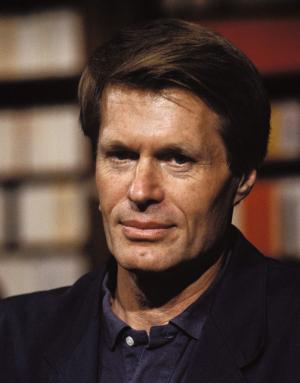
The 2008 Nobel prize-winner for Literature, Jean-Marie Gustave Le Clézio (left), says

The dawn of peoples is important because we seem now to be living in the dusk. You have the sense that we are getting near the end.

For those who haven't read Le Clézio, a French professor at Columbia University explains his appeal, 'There is a concern for civilizations, a concern for ecology.' more ...

Saturday, 5 July 2008

last two

'We are the first generation of human beings that are going to have to think like Noah. We are the first generation of humans who are going to have to think about saving the last two pairs.'

New York Times columnist Thomas Friedman, author of The World is Flat on 'the age of Noah'. more ...