Showing posts with label seasons. Show all posts

Wednesday, 8 June 2011

spring moved at 1.3 miles an hour

For a couple of years, this blog has been reporting on a remarkable school project, at the Paideia School in Atlanta, Georgia, which follows the arrivals of daffodils along the east coast of America.  One of our editors, Kellie Gutman, participates in the project. The results for 2011 are now in.

"The southernmost daffodil arrived in Jacksonville, Florida March 4th, and the northernmost daffodil arrived in Ft. Kent, Maine, April 27, 2011.  The distance was 1812 miles in 56 days, 32.4 miles per day, or about 1 1/3 mile an hour."

This is the 21st year of their daffodil project, and the previous five years posted speeds of 12, 16, 20, 23.4, and 23.5 miles per day.  It seems that a late-starting spring, such as was experienced in Boston this year, makes spring race up the coast to catch up. When a blooming daffodil was finally spotted in Boston, on April 5, spring quickly followed with a sudden, intense flowery display, unrivaled for the last many years.

See also: spring's progress, school postcard, it's a mile an hour, as the snow melts, spring arrives at three times the speed
more ...

Wednesday, 6 April 2011

surest sign of spring in the US

The cherry blossoms are in full bloom in Washington, DC. This is the nation's signature sign of spring, and the city celebrates their arrival with a festival.  Up north in Boston, our editor, Kellie Gutman, spotted her first daffodil yesterday. Her postcard to the Padeia School, in Atlanta has been filled in with the date of April 5 and sent to them for their charting of the speed of spring's advance.

Meanwhile, in a recent comment, Robin Dally googles the number of people showing any interest in "the signs of winter".

See also:
Keeping an eye out for the first daffodil
Spring's progress
more ...

Friday, 25 March 2011

how much more interested are we in first signs of spring than first signs of winter? answer: 16 times

How much more interested are we in the first signs of spring than the first signs of winter? Here are the stats when you search on Google for the following phrases:

"Signs of spring" 1,120,000
"Sign of spring" 6,540,000
"Signs of summer" 893,000
"Sign of summer" 183,000
"Signs of fall" 344,000
"Sign of fall" 386,000
"Signs of autumn" 221,000
"Sign of autumn" 219,000
"Signs of winter" 136,000
"Sign of winter" 328,000

Add the "sign" and "signs" for each season (and combine the totals for "autumn" and "fall") and you get:

Spring 7,660,000
Summer 1,076,000
Fall/Autumn 1,170,000
Winter 464,000

The result? There is seven times more interest in spring than in summer. There is six and a half times more interest in spring than in autumn and there is a whopping 16.5 times more interest in the arrival of spring than the arrival of winter. more ...

Wednesday, 9 March 2011

spring's progress: from chiffchaffs in cheddar gorge to snow on the shady side of the street in boston

The view from Kellie's window on the sunny side of the street
The zoologist @lillashaw tweeted BBC Springwatch today to wonder when she would hear the first chiff-chaff of the year. Forget the frogs, the bees and the buds:

"for me that officially marks the arrival of #ukspring
This weekend, @lillashaw says in another tweet, she is off to Cheddar Gorge to listen out for any chiffchaffs:

"that's where I heard them first this time last yr :)"

Meanwhile, our America-based co-editor Kellie Gutman sends an update on spring's late arrival in Boston:

The Paideia School in Atlanta tracks the rate of spring's arrival all along the East Coast by plotting exactly when the first daffodil is seen all the way along the 2,377 miles Route 1. It has been getting postcards from spotters of the first daffodil since January. Last year my Boston postcard reported a daffodil on March 30th.

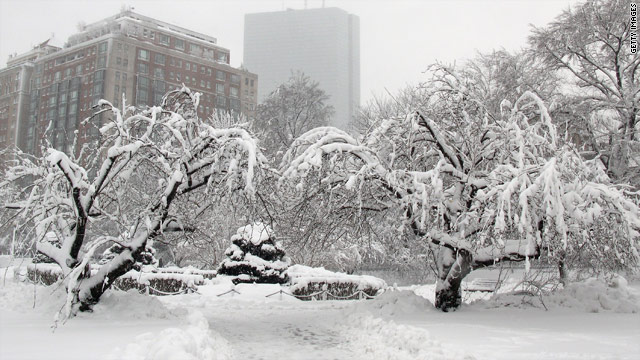
Spring is reaching us slowly. A Boston friend has seen a snowdrop in a neighbor's garden. The snowpack on my front lawn has now disappeared, although across the street, on the shady side, there are still large piles. Today the temperature is right where it should be; the buds on the apple trees along the fence are starting to form and the ground is beginning to thaw.

But students at Paideia should be warned: it will probably be April before the first daffodil appears on our street.

Last year we followed this project in the speed of springthe melting snow and the results for 2010.
more ...

Tuesday, 22 February 2011

What are the first signs of spring - frogs, birds, bees or buds?

From frogspawn.org.uk
The BBC’s Nature UK blog has asked,‘How do you define spring?’ The Daily Mirror thinks spring is coming early in the UK, but others disagree. Our American co-editor Kellie Gutman searches online for an answer.

It is not easy to answer, except to say, that if you follow Twitter there are many signs. The BBC's Springwatch has been receiving tweets from all over the UK on the topic.

On Feb 2, lakedistrictnpa tweeted from Kendal:

Saw loads of snowdrops on the walk into work. Spring’s a-coming! #ukspring

On Feb 4, Boudica_ tweeted from Devon:

Red-tailed bumblebee spotted yesterday in Herts; recorded @#naturescalendar.

On Feb 6, jerembybiggs tweeted:

Is this the UKs first frog spawn?: http:wp.me/pjz4j-1oe

On Feb 8, landguardranger tweeted from Felixstowe:

just seen first elder leaves breaking their buds on reserve, bliss #ukspring is on its way.

On Feb 10 Jemnick tweeted from Hampshire:

Chaffinch, song thrush, dunnock all in spring song mode! Great! #ukspring

On Feb 20 skylarksue commented on BBC’s Nature UK blog

Here in Essex garden, snowdrops have been out for 3 weeks. Bluetits are rearranging grass & straw in the nestbox. There are buds on my cherry tree.


Meanwhile, this blogger, writing from Boston, has just been cross-country skiing. The record-breaking snow is beginning to melt. Houses on the sunny side of the street have a foot still in their front yards; those on the shady side have two-to-three feet.

To record your own Spring sightings, sign up to nature's calendar

To follow Spring's advance in the US, look at Journey North 2011

To follow the way a school has followed the first signs of spring, year after year:
school postcard asks our snow-bound co-editor to keep an eye out for the first daffodil
flowers on stage: snake's head fritillaries
spring forward
more ...

Tuesday, 25 January 2011

school postcard asks our snow-bound co-editor to keep an eye out for the first daffodil

On a day when eight inches of snow fell on Boston (above), our co-editor Kellie Gutman receives a postcard asking her to look out for the first daffodil.

Boston has already received its yearly average of snow for the year - 42 inches. But that hasn't discouraged the fourth and fifth class students at the Paideia School in Atlanta, Georgia, from sending out their annual request for people to monitor the progress of "blooming daffodils" along Route 1.

A major North-South highway, Route 1 runs along the East Coast for 2,377 miles, from Key West, Florida to Fort Kent, Maine. Each year the students at Paideia School in Atlanta send postcards to postmasters and friends who live in towns along the route, asking them to mail back a postcard with the date of the first sighting of a blooming daffodil in their town.

They use this information to plot the speed of spring’s advance, and, before the end of the school year, they send out a report of their findings. It's one way of measuring season creep. Also, as a school project, it's exemplary, managing - as it does - to be poetic, scientific and participatory.

Last year we followed this project in the speed of springthe melting snow and the results for 2010. more ...

Thursday, 23 September 2010

autumn moon

September's full moon arrived on the same night as the autumnal equinox. This occurred at 03.09 this morning, marking the official start of autumn in the Northern Hemisphere, as well as the start of spring in the South Hemisphere.

The last time a full moon occurred on the same night as the autumn equinox was 23 September 1991. It won't happen again until 2029.

All that, and - as if on cue- the weather outside this blogger's window went overnight from sunshine to persistent rain. more ...

Thursday, 3 June 2010

it's a mile an hour in the states

The results are in:

The southernmost daffodil (and first) arrived in Jacksonville, Florida, January 25, and the northernmost daffodil arrived in Ft. Kent, Maine April 15. The distance was 1884 miles in 80 days, 23.5 miles per day or about 1 mile an hour.

Backstory: Stephen Fry says daffs move at a third of a mile an hour in the UK. An Atlanta school measures the progress. Our co-editor gets a daffodil post-card to fill in.

Thanks to: Paideia School more ...

Friday, 7 May 2010

summer time

The English summer arrives some 18 days sooner than during the late 1950s. more ...

Thursday, 18 March 2010

at last ... spring reaches cumbria

Following today's earlier blog about daffodils having reached Falmouth, Virginia, my co-editor, Wallace Heim, sends a pic (left) from Low Wood, Cumbria:

The first daffodils appeared yesterday. They're the wild variety up here, in the brambled edge between the woods and the village, on a fairly steep, stony slope. The cultivated ones, civicly planted along the roads, haven't blossomed yet.

(Low Wood's latitude and longitude are: north: 54°15"; west: 3°2")

On the Today programme on Tuesday, they asked: Where is spring? more ...

as the snow melts


A friend emailed yesterday to say how much she had liked:

the poetic and truly participatory project that was on your blog about school kids and postal workers tracking the flowering of daffodils and the coming of spring in the States.

The school was the Paideia School in Atlanta. After we blogged about the project, which charts the speed at which spring arrives each year along the east coast, my co-editor Kellie Gutman was asked by the teacher, Peter Richards, to be one of the spotters.

Kellie fits the target area for spotters, as she lives within five miles of Route 1, which runs from Florida to Maine, and takes in Miami, Jacksonville, Augusta, Columbia, Raleigh, Richmond, Washington, Baltimore, Philadelphia, Newark, New York, New Haven, Providence, Boston, and Portland. Peter Richards sent her the postcard (above) ready to be filled out and mailed at the first sighting of a daffodil:

When you see the first outdoor daffodil blooming in your area, please let us know. We will send you the results of our research in the late spring.


Two weeks ago, Kellie went to the spot in her garden where she expects to see the first flower (left). Nothing but snow. But Boston hit 65 degrees this Wednesday and it's expected to be warm all week.

The first flower there may not make the first day of spring (20th-21st March), but the students at Paideia will be told as soon as it does.

Update: Peter Richards informs us that 'as of March 12th, the daffodils are up to Falmouth, Virginia.'


more ...

Thursday, 18 February 2010

nearly here

Sightings of swallows in Southern Spain and swifts in the Levant. Spring is on its way.

(See spring forward and spring arrives at three times the speed.) more ...

Wednesday, 27 January 2010

spring arrives at three times the speed

Two days ago this blog noted that Stephen Fry had said on the TV show QI that spring advanced in the UK - from the south to the north, obviously - at a speed of a third of a mile an hour.

Turns out things happen more briskly in the United States. The 4th/5th Grade class at the Paideia School in Atlanta measures the progress of spring - as defined by the first daffodil blooming. They do this, as my colleague Kellie reports,

by writing to post office directors from the tip of Florida to the top of Maine, and asking them to mail back a postcard with the date of the first sighting of a daffodil. The class follows it all on a map with colored pins, etc, and finds the speed of spring on the East Coast.

The research has shown that:

The southernmost daffodil arrived in Alma, Georgia January 21, and the northernmost daffodil arrived in Ft. Kent, Maine April 7, 2009. The distance was 1780 miles in 76 days, 23.4 miles per day or 1 mile an hour.

That's three times the speed that spring moves in the UK.

(Big hat-tip to Peter Richards.) more ...

Monday, 25 January 2010

spring forward

On Saturday night's edition of QI, Stephen Fry asked what takes eight weeks to travel from the southern-most part of England to the northern-most part of Scotland.

The answer, it turned out, is the spring as it advances north at about a third of a mile an hour. (One of the show's guests, Hugh Dennis, suggested that if you timed your walk correctly daffodils would keep popping up all along the way.)

Spring is traditionally defined in the Northern Hemisphere as the three-month period of March, April, and May. An eight-week difference within a three-month period (just in the UK) is fairly sizeable.

But it's more extreme than that. Fry didn't go on to discuss how the dates for spring have shifted (as season creep leads to earlier springs and longer summers) or how those dates might continue to change.

When Shakespeare writes in Sonnet 98: 'From you have I been absent in the spring ...', modern readers could find themselves imagining a time of year that's two months' adrift from the April mentioned in the poem. Phenologists have observed primroses, snowdrops and frogspawn in the first week of January. more ...

Monday, 14 December 2009

twitter as good as today

The Today programme has been famously sneering about the vacuities of Twitter. But that in itself is just another news story it has missed. Here are five things this blog has learnt on Twitter this morning:

1. A new phrase: 'sustainable prosperity'. (ht: @drgrist)

2. The rate at which our footprint is growing: in 2006, the most recent year for which data is available, humanity’s footprint grew almost 2% from 2005, and 22% from a decade before. (ht: @EndOvershoot)

3. The rate of sea rise: a new study indicates sea rise rate tripled (ht: @tweetingdonal)

4. A new type of capitalism: a look into Monsanto's 'seed business' reveals what @stevesilberman calls 'DNA-based capitalism'. (ht: @Arch4HumanityND)

5. When it's darkest: tomorrow marks the earliest sunset for UK this year; although mornings get darker until January, it's now as dark as it gets pm. (ht: @AngusWillson @thegreatgar)

... and one great quote:

In the end, we will remember not the words of our enemies, but the silence of our friends. - Martin Luther King Jr. (ht: @robertiannone)

Would this blog have learnt as much listening to the Today programme? more ...

Sunday, 17 May 2009

the short goodbye

The Independent's environment editor Mike McCarthy discusses bird migration with Radio 2's most famous ex-chorister Aled Jones.

McCarthy's new book Say Goodbye To The Cuckoo describes some of the impact that climate change is having.

For instance: oak leaves appear earlier, perhaps a month earlier than 50 years ago, and the insects that feed on oak leaves are hatching earlier. By the time migrant birds complete the 6,000 mile return journey, McCarthy says (38 mins in), the prey that they normally feed to their young has already been eaten by others.

In the interview McCarthy emphasises the cultural resonance of those bird populations that are in serious trouble: the cuckoo is one, the turtle dove another ('prominent in the Song of Solomon ... used to be common across England a generation ago, now hardly seen anywhere').

He also makes the point that climatologists have 'a completely different view of the future to the man or woman walking down the street today'. more ...

Thursday, 5 February 2009

keeping theatre cool

One of the Guardian theatre blogs yesterday crammed in an impressive number of gruesome puns about snow and theatre: 'all white on the night', 'no business like snow business', 'the white stuff', etc.

But its main point, that during the winter months in Canada there's a growing appetite for site-specific work that uses snow and ice (and LED lights), is a striking example of seasonal theatre. more ...

Wednesday, 5 November 2008

meeting and mating

Best known as Alan Ayckbourn's home, Scarborough is going to renovate its old 8000-seater outdoor theatre. The head of the Central School of Speech and Drama explains,

If people want comfort they can get that at home. That’s not why they go out. They go out for the social experience – for meeting and mating, eating and dating. more ...

Saturday, 11 October 2008

'theatre revels ...'

writes Guardian theatre blogger Andy Field,

'in the directness of its relationship with the real world. It is the perfect medium to begin playing with and making something wonderful out of our ever-more miserable weather.' more ...

Wednesday, 18 June 2008

real kick

Last month this blog speculated on how theatre might be
more seasonal. Christopher Woodward, director of London's
Museum of Garden History, says, 'There is a real thirst
to bring nature and the seasons back into the concrete city.' He even takes part in his first act of guerrilla gardening. 'There's definitely a real kick, isn't there, to digging up public land?'

Video of some comic street theatre: guerrilla gardeners are planting forget-me-nots (above) one night at the Elephant and Castle roundabout when some policemen arrive and threaten them with arrest for criminal damage to public property. more ...