Wednesday, 5 September 2012

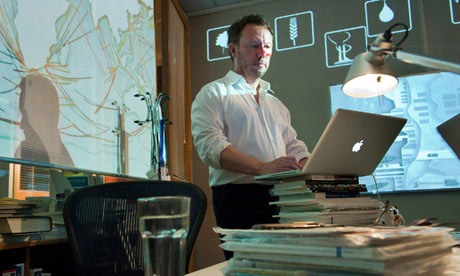
Jonathan Jones faces the empty museum

Guardian art critic Jonathan Jones on the sixth extinction

"Human activity endangers entire species, yet human culture is profoundly rooted in nature. The loss of a species is also a loss of the images, stories, symbols and wonders that we live by – to call it a cultural loss may sound too cerebral: what we lose when we lose animals is the very meaning of life...The range of animals and plants threatened by the sixth extinction is such that it menaces the foundations of culture as well as the diversity of nature. We are part of nature and it has always fed our imaginations. We face the bare walls of an empty museum, a gallery of the dead."
more ...

Tuesday, 4 September 2012

New on our news page

On the move:

Nowhereisland comes to Bristol this week-end, the final stop on its tour around the south west.

In the north west, Ghost Bird walks the Trough of Bowland remembering the Hen Harrier and the Pendle Witches, and Sand Pilot crosses Morecambe Bay.

Walking across Belgium, the Sideways Festival comes into Turnhout and stops for a symposium.

Other conferences coming up are composting culture (Association for the Study of Literature and the Environment - UK) and building resilience (Transition Network).
more ...

Friday, 31 August 2012

stagereads features Caridad Svich

photo: stagereads, Fishing in the Gulf of Mexico

Kellie Gutman writes:

A new website, stagereads, is publishing plays by emerging playwrights, which are e-readable on mobile devices. They are available by subscription, with a 155 discount for those subscribing before 15 September.  The first featured playwright is Caridad Svich and her recent play The Way of Water.

Svich received the 2012 OBIE Award for Lifetime Achievement in the Theatre.  The Way of Water has been traveling since 3 April, 2012, and has had readings in fifty cities in the United States as well as in the UK and beyond.  The play, written after the Deepwater Horizon BP oil spill, tells the story of two fishermen in the Gulf of Mexico, who have to deal with the after effects of the spill. The introduction to the play is written by Henry Godinez, Resident Artistic Associate at the Goodman Theatre in Chicago.

He writes in his final paragraph:

Many a great play has been written about corporate negligence and devastating catastrophes, but what makes The Way of Water so compelling is the way it exposes the after effects of such sensational evens in the most real of human terms.
more ...

Wednesday, 8 August 2012

On time and travel: anticipatory histories at Kilmahew Estate

Benjamin Morris writes: 

Kilmahew Estate, located in Cardross, west of Glasgow, has long been a source of fascination. Despite having been a settlement of some sort for hundreds of years, featuring both a medieval castle and a Victorian stately home, the contemporary lives of the site, first as a Catholic seminary, and then a drug rehabilitation centre, have by comparison been surprisingly brief. St Peter’s Seminary opened in 1966 and lasted two decades; the rehabilitation centre, only half that before closing its doors. Since then, the site has become one of the most popular ruins in Scotland: serving as impromptu musical stage, all-night rave site, unofficial film set, squat encampment, and destination for urban explorers from far and wide.

Explorers, of course, being a broad church. Recently I was privileged to join a group of artists and researchers on a visit to the site, sponsored by the Invisible College and the Royal Geographical Society. It’s important to take the right book on a journey, and fortuitously, tucked away in my bag was a new volume of short essays exploring the futures of historic landscapes: Anticipatory History, edited by Caitlin DeSilvey, Simon Naylor, and Colin Sackett. I couldn’t have brought along a better guidebook.

That said, Anticipatory History is not a guidebook in the traditional sense. Its structure hews more towards a glossary - community-sourced and collectively-written - of terms that are central to ecological thought. Concepts such as adaptation, equilibrium, memory and uncertainty are joined by processes such as erosion, managed realignment, palliative curation, and unfarming. As a conceptual guidebook, it prompted new and novel ways of thinking about this dynamic site, particularly its history of constant change. For this is their aim: 'History that calls attention to process rather than permanence may therefore help us to be more prepared for future change; to respond thoughtfully and proactively, rather than in a mode of retreat or regret.'

Indeed, it was difficult to cover the grounds of the site without feeling those tensions between pasts and futures, between the curated and the wild, play off one another anew. In the seminary building, for instance, the many different forms of engagement with the site were amply visible. Graffiti of more and less accomplished forms graced the walls; the altar had been broken and desecrated, and rubbish of all sorts lay strewn about, inviting impromptu archaeologies and conjectures as to who had left it there, and why. And, of course, what else would come in time. As the editors note, anticipatory history creates a means of approaching historic landscapes outside the bounds of grand narratives or authorised discourses. Rather, they suggest, it 'leaves room for expressing the 'small stories' and 'lay knowledges' that are layered in place, and then linking these to a hoped-for future.'

Over the past half-century, some of those futures have already taken place independent of the human presence. Entering the site via the western approach, younger stands of trees, no more than twenty years old, have sprung up at the exact moment the rehabilitation centre had shut its doors in the early 1990s, and now encroach against the older-growth stands. Anyone looking to rehabilitate the site would have to first map the species onset, then determine how best to bring the site back to a more pristine woodland, keeping in mind, as the editors of the volume claim, that such narratives of purity, often defy the larger narratives of dynamicity that complex landscapes harbor.

An excellent example of these tensions centres on a rhododendron tunnel, considered a key feature of the landscape, indeed, part of its ‘heritage’, despite this species having only been introduced to the UK at the end of the 18th century. Despite their ornamental appeal, their introduction has had unintended consequences. As the entry on the species in the volume observes, 'Rhododendrons have been able to out-compete many native plants in Britain, and because their leaves are inedible to many animals, their spread has proved difficult to control and they have become reclassified as pests.'

Entering the tunnel today, it is hard not to be impressed at the intricacy and scale of its design, as well as the atmospheric effect of the corridor. In full leaf, the tunnel feels as dark as an abandoned Tube station, or a holloway such as Robert Macfarlane has recently explored. Non-native species or not, one does feel changed by passing through this ‘natural’ architecture, recalling the theologies of transformation that would have been discussed at length around, and within, the grounds, and explaining why one man in the area, the site curator noted, has threatened to chain himself to the bushes should an order for ‘remediation’- clearance - come through.

Given these tensions, the futures for the site over the long-term remain unclear. Currently under consultation by NVA, Kilmahew looks set to become a multidisciplinary arts site encompassing arts research and practice in a variety of fields. The sound artist Michael Gallagher has recently produced a 45-minute audio documentary on the site, layering the voices of former inhabitants together, a compelling departure point for artists and future historians. With so many stories yet to yield from its past, this move would undoubtedly be a productive use of the space, particularly in terms of conservation, amid its ruination, the site still retains the serenity, grace, and seclusion that gave rise to so many of its lives, and any attempt to preserve that is worth the effort.

But thinking of its futures, other questions remain. Given its extensive grounds (133 acres, encompassing woodlands, fields and burns), its diverse constituencies (many of which are transitory and difficult to document or engage) and its architectural histories (a chapel, a castle and a stately home now demolished), the lives of Kilmahew collide and converge in ways that challenge both cohesive collection and swift, dispensable interpretation. The site precludes our understanding, no matter how many times we visit. As it should. For if anticipatory history teaches us anything, it's that we should move in the direction of, from away from, those limits. The land always has more to tell us. If only we would listen. 

A writer and researcher, Benjamin Morris is currently a post-doctoral fellow at the Institute for Advanced Studies in the Humanities at the University of Edinburgh. 


more ...

Wednesday, 25 July 2012

New on our news page

Stephen Emmott in Ten Billion
Nowhereisland, a nomadic landscape moving through the landscapes of the southwest, starts its journey today at Weymouth.

The Ten Billion lecture continues at the Royal Court in London.

Ten days to the start of the Edinburgh Festival Fringe, with over 100 shows with ecological themes: dance, theatre, kids, comedy, exhibitions.

Creative Carbon Scotland and Festivals Edinburgh add four events to the Fringe on greening the arts.
  
Volcano Theatre and the Centre for Alternative Technology will host the Emergence Summit in Wales, approached with a five-day walk.

Julie's Bicycle and Creu Cymru set out to green 42 Welsh theatres and arts venues. 
more ...

Monday, 23 July 2012

Culture and Ecology at the Edinburgh Book Festival

Doug Allan Picturing Polar Bears
Kellie Gutman writes:
  
This year's Edinburgh International Book Festival takes place from 11-27 August. One of the themes is 'Drawing on our Resources', in which writers ponder attitudes toward nature, food, and using our natural resources.  Another major theme is 'Odysseys', which covers journeys writers have taken within England and beyond.  Among the listings from these two areas - Fred Pearce talks about swathes of land being bought up by foreign countries, raising fears of food shortages in The Land Grabbers; Karl Miller of the London Review of Books recounts his passion for the countryside in the walks he took with his friends Seamus Heaney and Andrew O'Hagan; Doug Allan presents photos of the Arctic and Antarctic from his book Freeze Frame.  These and many others are listed in  our picks of the Festival.  There has been a large demand for bookings since tickets went on sale.
more ...

Wednesday, 11 July 2012

Greening Shakespeare

The Very Merry Wives of Windsor, Iowa.  Jun 6 - October 13 at the
Oregon Shakespeare Festival


Kellie Gutman writes:


The Oregon Shakespeare Festival was founded in 1935 and is one of the oldest and largest non-profit theatres in the United States.  They operate over an eight-and-a-half-month schedule, with eleven plays, three theaters and 780 performances.  Approximately 400,000 persons are in attendance at their facility in Ashland, Oregon.  The OSF has an operating budget of $26 million.

Katie Gomez, Physical Plant Assistant, is the Green Task Force Coordinator. When asked how the OSF promotes 'greening' their operations, she writes:

OSF has a long list of things we do to be more sustainably aware and green.  Besides recycling paper, one of the easiest things to do here, we are now recycling batteries, some plastics, and a multitude of items used in building sets.  Many costumes are reworked from many made before, from our vast warehouse of costumes.  We do not sell plastic bottles of water anymore - a container given or purchased is filled from fountains.  The Scene Shop uses denim insulation.  We use CFL whenever possible.  As soon as LED's are more affordable, we will switch to those.  In some instances we do use them now.  This is just the tip of what we do here.  We are constantly trying to do more.


Katie added that although they have not done a production that is specifically "green", the Green Task Force is working on promoting this idea to the Artistic Staff.
more ...

Tuesday, 3 July 2012

New on our news page

from TEN THOUSAND WAVES by Isaac Julien
It's all talk.

The artist Isaac Julien is in conversation with the academic David Harvey on choreographing capital at the Hayward

Handspring UK discuss puppetry and Crow with dramaturg Jane Taylor at University of London.

Ackroyd & Harvey talk about trees with The Economist's Oliver Morton, Robert Holtom of Eradicating Ecocide, and Edward Parker, photographer, in the Front Room at the QEH.

LIFE BOAT, by the Institute for Crazy Dancing, puts people in the ribs of a boat to talk together about migration, ethics and sustainability, at the National Theatre and touring.


more ...

Friday, 29 June 2012

Speedier spring

'Progress of Spring' final report


Kellie Gutman writes:


The  fourth and fifth grade class at the Paideia School in Atlanta, Georgia, has completed their year-long project documenting the progress of spring, as defined by the first blooming daffodil reported along the length of Route 1, from Florida to Maine.  Their results confirm the general impression that this was a very warm spring on the eastern seaboard.  At the northernmost point, Fort Kent, Maine, daffodils were spotted on April 4, 2012 - nearly a month earlier than last year, and the earliest in the twenty-two years that the class has been keeping records.  The rate that spring advanced, 1570 miles in 93 days, was approximately 17 miles a day, or .7 miles per hour, which is about average.

See also: our report on daffodil spotting
more ...

Thursday, 28 June 2012

Taking a book for a walk

Wallace Heim writes, with thanks to Dee Heddon

What book would you take for a walk...?

In 1794, John Hucks and Samuel Taylor Coleridge walked to North Wales. Hucks carried with him the poems of Thomas Churchyard.

In 1802, Coleridge walked through Cumberland, carrying with him 'a shirt, a cravat, two pairs of stockings, tea, sugar, pens and paper, his night-cap, and a book of German poetry wrapped in green oilskin.' He apparently read the Book of Revelations in Buttermere.

In 1818, John Keats travelled the Lake District and up to Scotland with his friend Charles Brown. Keats' carried Dante's Divine Comedy, Brown the works of John Milton.

In 2012, during August and September, Dee Heddon and Misha Myers are joining the Sideways Festival, walking from the west to the east of Belgium. For the length of the walk, they will carry a walking library - rucksacks filled with books that are good to take on a walk. The library will support a peripatetic reading and writing group.

Dee and Misha are in the process of building the library. So far, they will be carrying Werner Herzog's Of Walking in Ice, Nan Shepherd's The Living Mountain, Rebecca Solnit's A Field Guide to Getting Lost and more.

They welcome suggestions of books to take on a walk, including details of books taken on a walk by illustrious walkers/writers.

Email suggestions to Dee Heddon.
more ...

Wednesday, 27 June 2012

New on our news page

'Subsidy, patronage and sponsorship' at the V&A
In London, the V & A will host a 3-day discussion on 'Subsidy, patronage and sponsorship: Theatre and Performance Culture in Uncertain Times'.

A bundle of opportunities are coming up.

In Glasgow, there's the offer of a funded PhD in theatre and learning for sustainability.
In London, a DIY training project for artists on performance, oil and sponsorship is offered by the Live Art Development Agency.
On the Isle of Wight, the Bestival Festival is looking for a short film on clearing the mess.
And there's the chance to walk across Belgium carrying books.

Online, there's TJ Demos' essay 'Art After Nature, the post-natural condition'.
more ...

Tuesday, 19 June 2012

New on our news page

from 66 Minutes in Damascus / LIFT
In Leeds, the Performance Studies International conference, a combination of performance academics and artists, has at least 14 panel sessions with ecological themes -  like theorising eco-performance; performing environmental risk; sex, meat and ecology; and performing fluidity in watery places.

Alongside the PSi conference is the Ludus Festival, which includes Lo Monstre, a large animatronic insect-like animal walking through the streets of Leeds, and A Meadow Meander, immersing audiences in an ecological labyrinth.

On the streets of London, Lucian Bourjeily's work 66 Minutes in Damascus, during which the audience members are placed as a group of tourists visiting the Syrian capital and are arrested by the Syrian secret service, will be studied for its carbon efficiency.

The Edinburgh Film Festival starts on Wednesday. Dr. Seuss' Lorax, Paul the Psychic Octopus, animals in captivity, the coal roads of China and the landscape of Fukushima all feature.
more ...

Thursday, 14 June 2012

Eden and the overburden

Wallace Heim writes: 

The partnership between the Eden Project and Rio Tinto has been billed as supporting education projects about sustainability and research into post-mining regeneration. This was a working partnership, not merely a "social license to operate" - the creating of a benevolent public image for corporations such as BP, Shell, Rio Tinto, through their association with cultural institutions, and now the Olympics.

One of the education projects of this partnership is a pop-up children’s book, Earthly Treasure, full of pictures of dazzling jewels and brightly coloured pages showing how modern life can only exist through minerals that must be mined.

There’s a page showing a huge open pit mine, a sombre, near-monochrome dug-out bowl. You can slide trucks to take away the "surface layer" and "pull down the tab and blast away the top layer of earth, called the overburden".

The "overburden". The infinitely complex soil that makes life possible is merely a weight, a waste to remove to get to the riches below. The phrasing harks back to Francis Bacon who wrote in his Novum Organum in 1620 that miners were the new class of man who would interrogate and alter nature. Nature could be "forced out of her natural state and squeezed and molded".

But now, the soil holds no more secrets. It’s only the burdensome surface layer.

This normalizing of open cast mining and mountain top removal is given to children as if a game, one more gem to absorb in their education. Many reasons may lie behind using that phrasing, but the license it condones is not merely cultural benevolence.

h/t: Robert Newman in the Guardian 
more ...

Tuesday, 12 June 2012

Buildings, energy and culture

Wallace Heim writes: 

The Theatres Trust and Julie's Bicycle today publish Energising Culture, a guide to planning a sustainable energy future for cultural buildings. The guide is intended to help arts companies make informed decisions about a long-term energy strategy for their buildings. It sets out the issues around energy demand, energy supply and the implications of these for an organisation's business models.

The 48 venues in The Theatres Trust's Ecovenue project contributed to developing the ideas of how theatres and small venues can manage their energy better.

This is the first of a two-part publication. The second part, to follow, will take a more comprehensive long-term vision of environmental sustainability and how the cultural sector intersects with it, ranging across new technologies and emerging cultural values.

The guide is a free download from both Julie's Bicycle and The Theatres Trust.
more ...

Monday, 11 June 2012

Edinburgh's greener Fringe

from Fukushima - A Silent Prayer of Poetry
Wallace Heim writes:

Among the bevy of shows at the Edinburgh Festival Fringe about Hitler, adolescence, Macbeth and stage spiritualists, there is a remarkable number of dance and physical theatre pieces with ecological themes. Consumerism and happiness, oil and politics, the Japanese earthquake, undercover policing, urban architecture and fear of the woods are among the ideas and sensibilities these shows are expressing.

Theatre shows number highly this year, too, with around 70 that have ecological themes varying from the strongly activist to the bucolic. Shows about animals, food and an apocalypse always feature. This year, there are three shows walking to Edinburgh; shows about abattoirs, about the Deepwater oil spill and the Fukushima nuclear leak; and shows about a swamp, plastics, population and the price of milk.


more ...

Thursday, 7 June 2012

Indie-theatre take on Deepwater spill

Wallace Heim writes: 

During April and May, The Way of Water, Caridad Svich’s play about the effects of the Deepwater Horizon oil spill toured over fifty venues in North America and Brazil, and in Berlin, Aberystwyth, Glasgow and London. The play toured not as a production but as script-in-hand readings by actors in each place.

The play, marking the two-year anniversary of the spill, traveled quickly, more like an indie-music event than a theatre tour. This new kind of theatrical experience is low-budget, international, tied in with social media and carbon-light.

The play deals with the toxic effects of the spill on four people, on their health, livelihoods and sense of community. The play’s impetus is towards taking action against corporate malfeasance, a revision of the plotline of An Enemy of the People.

Seeing the reading in Aberystwyth, Carl Lavery, Senior Lecturer in Drama, blogged 'Ten Thoughts on The Way of Water'. Here are three:

When I think of The Way of Water, I think of its linguistic rhythms and poetic beats - its politics of voice.

When I think of The Way of Water, I think of 4 young actors in Wales finding its meanings, walking its lines, tracing its shapes.

When I think of The Way of Water, I think of my Dad who died from a lifetime of exposure to the toxic fuel tanks of Phantom fighter jets.

photo: Encyclopedia Britannica online
more ...

Wednesday, 6 June 2012

HeatWave in Los Angeles


Kellie Gutman writes:

HeatWave, a project of the Los Angeles Theatre Community, is hosting a conference on 9 June, 2012, at TreePeople's Conference Center in Coldwater Canyon Park. Heatwave aims to generate new works on the Environment as well as greener practices in theatre operations.  The conference, reservations required, will have speakers - including Ian Garrett of The Center for Sustainable Practice in the Arts - entertainment and breakout sessions to encourage playwrights and producers in the LA-area to work together.

The project's mission says: HeatWave hopes to spark meaningful and creative cultural discourse with our audiences on the state of the planet and our place on it, empowering a ripple of activism and spurring meaningful change.
more ...

Friday, 1 June 2012

One Day on Earth


Kellie Gutman writes:

On Friday June 1, and Sunday June 3, New York's premier reuse center, Materials for the Arts, will be the recipient of proceeds from screenings of One Day on Earth.  It was made in 2010, and filmed in every country on earth on the same day.  There will be a week of showings to benefit local charities in New York City.

Materials for the Arts is a program of the New York City Department of Cultural Affairs.  It collects unneeded materials from businesses and individuals and donates them to arts programming across the city.
more ...

Wednesday, 30 May 2012

New on our news page

The Dark Earth and the Light Sky

The Hay Festival kicks off today, with talks on architecture, food, art, social justice and fashion activism for starters.

We also feature summer celebrations of a place: the Jurassic Coast, Stonehenge, Wilderness and the Thames.

Thinking ahead, Nick Dear's new play, The Dark Earth and the Light Sky, about the poet and nature writer Edward Thomas, opens at London's Almeida Theatre in the autumn.

image: iwantdesign

more ...

Tuesday, 29 May 2012

The right environment

from The Last Lunch
Wallace Heim writes:

The Best New Play Award, offered collaboratively by New Writing South and the Brighton Fringe, is an award that has nothing to do with ecology. But this year’s award was given to two productions that have something to do with ecology.

Playwright Jonathan Brown won for his play about meat-eating, The Last Lunch.

The company Feral Theatre won for Triptych, three productions on loss and extinction: Papusza, The Last of the Curlews and TreeStory. 

more ...

Thursday, 24 May 2012

New on our news page


The summer music festival season starts this weekend. We select the less-carboned, solar-powered, up-cycled, educational, chilled and frenzied green ones.

In Dorset, artists walk and talk with people who use their feet (26 bones) or their hands (27 bones) to work with or to investigate the Jurassic Coast.

In Bath, FAB, the Fringe Arts Bath Festival, starts this week-end, with themes of Sustainable Earth and Metamorphosis.

We've added the ecologist Wendell Berry's National Endowment for the Humanities Lecture, 'It All Turns on Affection', to our online essays.

In London, there's an alternative Rio+20 conference; an exhibition on the anthropocene; and an evening sharing food growing stories from Ljubljana, Havana, Chiapas in Mexico and Jaos in Palestine.

image above from the Isle of Wight festival
more ...

Wednesday, 23 May 2012

Tom Toles wedding cartoon

Copyright (c) The Washington Post
Kellie Gutman writes:


Pulitzer-Prize-winning Washington Post cartoonist Tom Toles' latest cartoon on climate change.

Toles has been nominated three times for the Pulitzer Prize in Editorial Cartooning, winning in 1990.  He replaced the legendary cartoonist Herblock at the Washington Post in 2002. Toles' cartoons are syndicated in over 200 newspapers.  He is known for tackling complicated subjects such as environmental issues.  He often includes a small doodle, a caricature of himself, in the corner.
more ...

Tuesday, 22 May 2012

U.S. Energy Secretary Chu on The Avengers


Kellie Gutman writes:

Steven Chu, the 12th Secretary of Energy for the United States, has a post on his Facebook page about the new movie, The Avengers. Though his friends are not listed, he does have 18,963 'likes' on his page. Chu lists his job:

As Secretary of Energy, proudly carrying out President Obama's ambitious agenda to invest in alternative and renewable energy, reduce our dependence on foreign oil, and create millions of new jobs. 

About The Avengers  he says:

'[It] focuses on a new, limitless clean energy source called 'The Tesseract."... While the "Tesseract" may be fictional, the real-life global competition over clean energy is growing increasingly intense, as countries around the world sense a huge economic opportunity AND the opportunity for cleaner air, water, and a healthier planet...'

more ...

Monday, 21 May 2012

Talking about climate change

Jason's story
Wallace Heim writes: 

One of the explanations offered for why climate change is not more prominent in people’s thinking is that it’s not physically seen. It doesn’t feel ‘real’ enough.

But a different view comes out in the stories people tell about how climate change is immediately altering their everyday lives. The climate is changing how they feel about the world and their decisions about what to do.

Project ASPECT, based at University College Falmouth, is gathering people’s stories about climate change from individuals and communities in Wales, northern England, London and Cornwall. Building a digital narrative archive, they are capturing on DVD how people talk about the climate in the context of their everyday lives.

There are those who watch. Heather continues the diary her mother started, recording every day what work is done on the family farm and the weather. Duncan and Matt are surfers in Cornwall, watching the storms. There are those who work with renewable energy, or, like Hanna, find green jobs for young people. Many are changing the way they grow food and eat: Mary from Incredible Edible; Owen with his backyard in Peckham; and masked night-time Ninja guerrilla gardeners. Singers, rappers, athletes tell their stories. Spontaneous acts of community kindness sit alongside the meticulous work of digitising the weather reports from World War I ship’s logs.

In these stories of everyday life, there is a cultural reality emerging, soft-voiced, but pressing. 
more ...

Thursday, 17 May 2012

A new chapter

Malcolm Bull on climate change ethics

"Climate ethics is not morality applied but morality discovered, a new chapter in the moral education of mankind. It may tell us things we do not wish to know (about democracy, perhaps), but the future development of humanity may depend on what, if anything, it can teach us."
more ...

Wednesday, 16 May 2012

New on our news page

Wasteland twinning: Nottingham and Yogyakarta

At the Brighton Fringe, The Ship's Log of songs marks the progress of the Boat Project by Lone Twin, and Feral Theatre perform three pieces on freedom, love and extinction.

OIL, photographs by Edward Burtynsky chronicling the oil industry, opens the new Photographers' Gallery.

A pop-up cinema at the edges of the Olympic Park hosts an evening of films on animals, cattle, herding and whaling.

Nottingham's wastelands are twinning with the wastelands of Yogyakarta, Indonesia. Artists are making the connections.
more ...

Tuesday, 15 May 2012

Six films on culture and climate change

About Water - 2007 a film about our precarious relationship with water
Kellie Gutman writes:


Filmbase, in Dublin, is presenting climate.culture.change,  a series of films from six European countries, and discussions, through 12 June on culture and climate change. A collaboration between Cultivate and the EUNIC European cultural partners: Goethe Institut, British Council, Austrian Embassy, Alliance Française and the Italian Institute of Culture, with additional funding from the European Commission, this film and discussion series is a lead-up to Rio +20, the 20th anniversary of the Earth Summit in Rio de Janeiro.

Information on the program available here
more ...

Monday, 14 May 2012

Carbon-lite touring

The Last Polar Bears on tour
Wallace Heim writes: 

The carbon footprint of a production meets the content of the play in the National Theatre of Scotland’s tour of their climate change play The Last Polar Bears. For the 350-mile tour, everything needed for the show will be carried by the cast and crew on bicycles made from reclaimed bikes. The vinyl panniers are made from recycled National Theatre of Scotland banners.

As part of the production’s legacy, the National Theatre of Scotland will donate to the World Wildlife Fund's Adopt a polar bear project on behalf of the 18 primary schools on the tour.

Alongside the production, director Joe Douglas will use the tour to interview people, ‘taking the temperature of how people are feeling about climate change.'
more ...

Friday, 11 May 2012

Floating platforms

A new study shows that plastic in the Pacific Ocean has increased 100 times over the last 40 years.

The only beneficiary, reports The Economist, is Halobates sericeus, "a small insect that now has lots of nice little floating platforms on which to lay its eggs".
more ...

Thursday, 10 May 2012

Good topic

From the London Review of Books

In the next issue, which will be dated 24 May, Malcolm Bull on the intergenerational politics of climate change.

more ...