


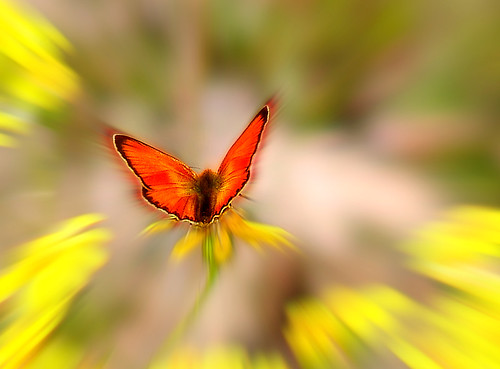
'The idea that a small event can produce large changes in the atmosphere dates back at least to Edgar Allan Poe, who discussed the growing impact a wave of the hand would have on the future. In the 1920s the British astronomer Sir Arthur Eddington focused on a match idly thrown from the window of a train, and in the early 1960s Lorenz considered the flap of a seagull's wings.'
It was a colleague of Lorenz's who shifted the image from the seagull to the butterfly:
'the move from seagull to butterfly came about when his friend Philip Meriless, unable to reach him as a meeting deadline passed, submitted the title "Predictability: does the flap of a butterfly's wings in Brazil set off a tornado in Texas?" for a talk Lorenz was to give in 1972.'
MSPs not told about collapse of funding deal for Scottish nature restoration
-
Exclusive: Ministers accused of trying to keep investment firm’s withdrawal
from partnership with NatureScot under wraps
A funding deal to raise £100m fr...
2 hours ago


 Posts
Posts


No comments:
Post a Comment